5 min read

The Art of Prioritization: Leading with Focus and Purpose

A wary Popeyes ballroom taught Bachelder: prioritize trust first, then focus. Leaders climb faster by choosing what matters.
The Art of Prioritization: Leading with Focus and Purpose
A.I. Generated

đŸ‘‹đŸ» Hello growth seekers,

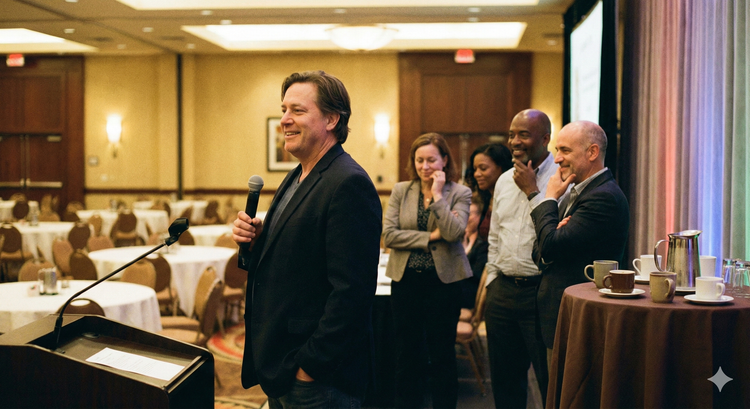
The ballroom looked like any franchise conference: coffee stations, branded backdrops, polite smiles that didn’t reach the eyes. But when Cheryl Bachelder walked to the microphone for her first real address as CEO of Popeyes, the room carried a different weight—years of frustration compacted into silence. People had invested money, time, reputation, and had the bruises to prove it. This was the moment when many leaders try to win the room by sounding certain: big promises, bold targets, a tight narrative that keeps fear offstage. You could almost feel that option hovering there, tempting and familiar. Instead, Bachelder chose the harder priority: credibility before charisma. She didn’t rush to be impressive. She slowed down, made space for what people were actually experiencing, and signaled—without theatrics—that their reality mattered. That choice seems small until you notice what it costs: you give up the short-term comfort of control. You accept that the room might not applaud. You risk looking “less CEO-like” in exchange for something far rarer in corporate life: honest information. In behavioural terms, she traded immediate status protection for a better data stream. In human terms, she created the conditions where adults can stop posturing and start solving. That is what prioritization looks like at the top of the ladder: you decide what the organization will optimize for when everyone is anxious, and you prove it with your first moves.

🧭 Prioritization is a psychological decision, not a calendar decision

Most people think prioritization is about managing tasks. In practice, it’s about managing attention under threat. When pressure rises, brains drift toward what’s loud, recent, or emotionally charged—salience beats importance, and “busy” masquerades as “effective.” That’s why turnarounds often dissolve into thrash: everything feels urgent, so nothing gets the sustained focus required to change a system. Bachelder’s franchisee-first stance was a way to shrink the decision space. If the people who deliver your brand every day don’t trust you, no strategy survives contact with reality—so you stop pretending you can fix everything at once. You pick the constraint. Then you protect it from distraction. This is where a Rogers-aligned lens becomes unexpectedly practical. When people feel respected and taken seriously, they tell you the truth faster; when they don’t, they manage impressions and hide problems. The speed of truth is the speed of improvement. Prioritization, then, becomes less about personal discipline and more about designing an environment that reduces defensiveness: leaders show congruence (no gap between words and behaviour), practice real empathy (not performative warmth), and treat partners as capable agents rather than obstacles to manage. The corporate-ladder lesson is sharp: senior roles reward judgment, not hustle. Judgment is the ability to name what matters most, accept the trade-offs, and align others around that focus without humiliating them into compliance.

✹ Focus turns into momentum when it becomes a shared operating rhythm

A priority isn’t real until it shows up on Monday morning. What made Bachelder’s approach scalable was turning “trust” from a speech into a system: clear expectations, simple measures people could act on, and repeatable conversations that made progress visible. This matters because behaviour changes through feedback loops more reliably than through inspiration. If teams can see whether operations are improving—and can discuss it without fear—learning accelerates. If metrics are used to punish, people game them; if metrics are used to help people win, people lean in. That distinction is where purpose stops being a poster and becomes a lived experience. For your own climb, steal the underlying move: define your “franchisees,” the people whose success makes your success real (customers, internal partners, operators, decision owners). Choose one outcome that improves their ability to win, and explicitly name one thing you will disappoint to protect that outcome. The trade-off is the proof. Then run a weekly rhythm that forces clarity: what did we learn, what did we change, what will we stop doing. That’s leading with focus and purpose: fewer priorities, defended consistently, in a culture where people can be honest without paying a social price. 

Practical tools

In this "Practical Tools" section, we've put together a set of resources to support your personal growth journey. Chosen for those keen to explore deeper and refine their leadership qualities, these tools are designed with genuine intention. Here, it's all about taking meaningful steps towards personal betterment. Let's begin!

🧭 The “franchisee map” for your org
Before you manage generations, map dependence. Identify the 3–5 people (often not your boss) whose daily choices determine whether your work lands: the operator, the analyst, the gatekeeper, the customer proxy. Now look at them through a generational lens as a hypothesis, not a label: who optimizes for speed, who for certainty, who for autonomy, who for belonging. Your career accelerates when you stop “doing great work” in a vacuum and start designing work so these people can win—Bachelder-style: trust before tactics.

🔎 Motive decoding (self-determination triad)
Generational differences often hide something more actionable: which motive is currently starved—autonomy, competence, or relatedness. In one-on-ones, listen for the telltale language: “I don’t have room to decide” (autonomy), “I’m not sure what good looks like” (competence), “I’m out of the loop” (relatedness). Then adjust your leadership micro-moves: offer bounded choices, define success with an example, or create a tighter feedback channel. You’ll feel “magically” persuasive because you’re targeting the right driver.

đŸ§© Two-speed agreements (sync vs async by generation, by task)
Stop arguing about “responsiveness” and build a two-speed contract: which decisions require real-time debate, and which should be async with a clear template. Older cohorts often read async as distance; younger cohorts read constant sync as control. The upgrade is to separate relationship from workflow: you can be high-trust and still be async-first. The ladder rewards leaders who reduce coordination cost without reducing human connection.

Food For Thought

Welcome to the "Food for Thought" section, your gateway to a curated selection of resources that will nourish your curiosity and inspire your creative journey. In this corner of Growth Republic, we bring a collection of insightful resources that you can look for on the web, from thought-provoking podcasts or books, to illuminating online articles that can expand your horizons and deepen your understanding of the topics we explore. Consider it your intellectual pantry, stocked with ingredients to feed your mind, and ignite your creativity. Dive into these resources and let the feast of knowledge begin.

📘 Book: Dare to Serve: How to Drive Superior Results by Serving Others: Bachelder’s own playbook on prioritizing trust (especially with franchisees) as the lever that makes performance scalable.

đŸ—žïž Article: The CEO of Popeyes on treating franchisees as the most important customers (HBR): A concise, high-signal account of “priority as stewardship” in a real turnaround.

🎯 Book: Deep work: rules for focused success in a distracted world: How to protect attention as an asset, not a mood—great for leaders who need focus that survives interruptions and politics.

🎧 Podcast episode: CNLP 182 — Cheryl Bachelder on servant leadership + turnaround lessons: A candid, applied conversation that connects the “trust-first” priority to day-to-day leadership decisions. 

Quote Of The Week
«The essence of strategy is choosing what not to do.» — Michael E. Porter. 

About the Author

Hi, I am Cesare Zavalloni. I am a Certified Executive Coach by IMD business school and Associated Certified Coach (ACC), member of International Coaching Federation (ICF). I bring more than 20+ years of experience as corporate executive in Fortune 100 companies and as outdoor adventurer. My purpose is to guide, encourage and inspire young professionals and executives like you to see your authentic leadership nature and the new possibilities this realization creates.

Enjoy this newsletter?

Forward to a friend, sharing is caring.

Was this forwarded to you? If you would like to receive it in the future, subscribe here.

Anything else? Hit reply to send us feedback or say hello. We don't bite!

Here's to a future of growth and success!

© 2023 LEADERFULLY Sàrl - CHE-425.245.494 - Privacy Policy - Cookie Policy - Credits